
.png)



.svg)
.svg)
.svg)
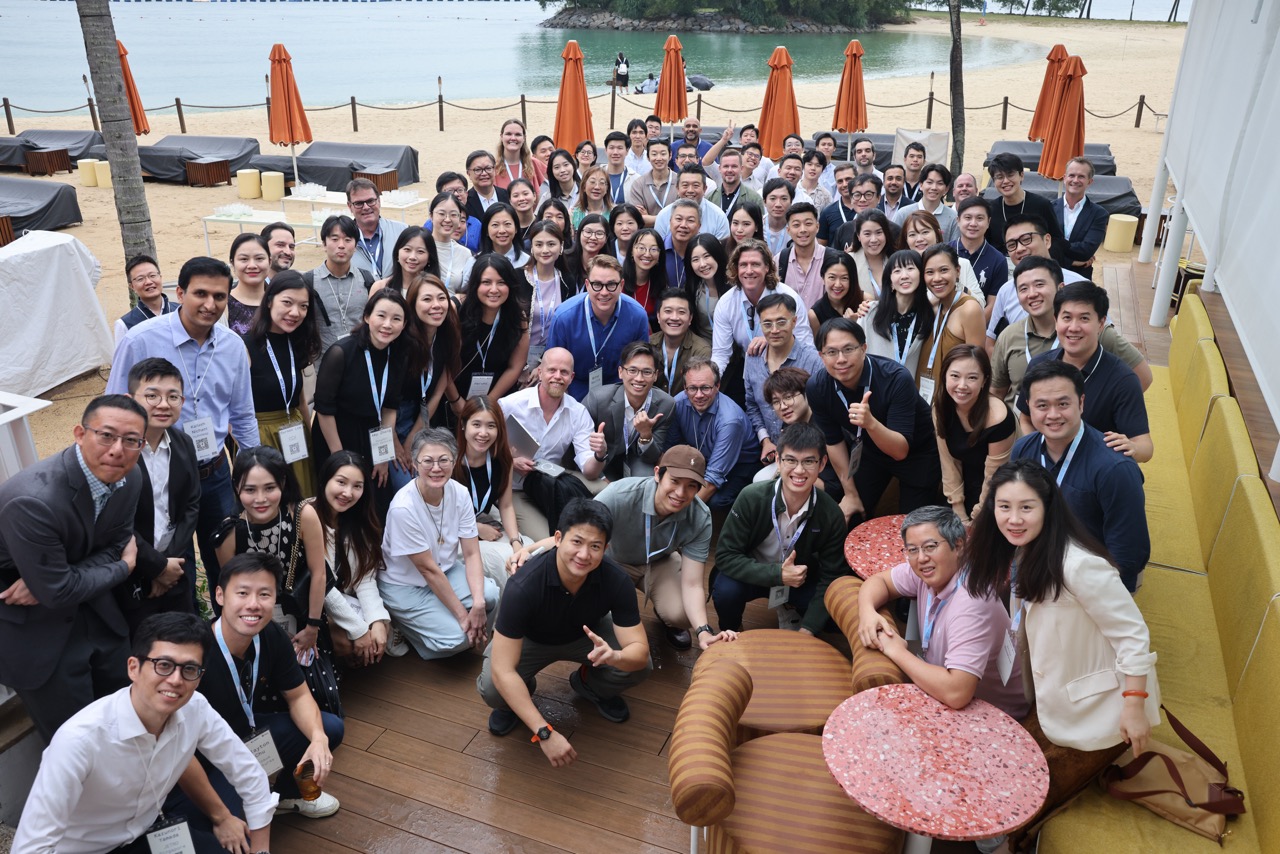
On November 13, 2025, we took Counter to Singapore. Over 160 corporate venture leaders across Singapore, Malaysia, Indonesia, China, Hong Kong, Japan, Australia, and beyond converged on Sentosa Island for a day of practical conversations, case studies, and data on corporate investing.
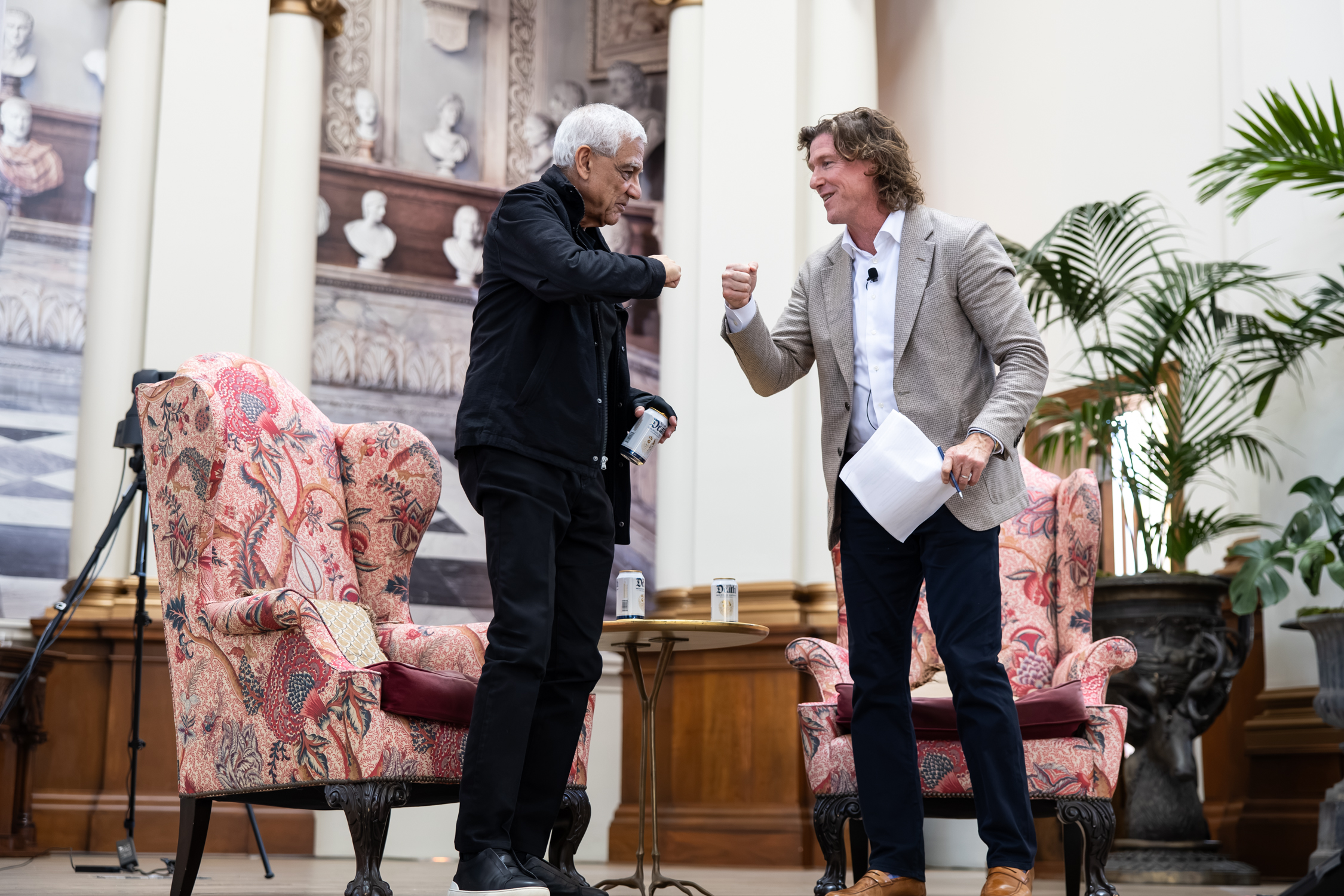
2025 has been a landmark year for our Global Counter Series: community-led gatherings designed exclusively for corporate venture capital (CVC) leaders worldwide. We kicked off with London Counter (May 2025), followed by our flagship Women in CVC Summit in San Francisco (May 2025), and then our first Japan roadshow, Japan Counter (July 2025), hosted across Tokyo and Osaka. It all culminated in Counter VII and CVC Week in San Francisco this past September, the world’s largest gathering of corporate venture investors.

Each Global Counter event shares the same DNA: curated content through an invite-only, corporate-only format; real talk with no party line, where we openly discuss both the challenges and opportunities shaping CVC; and a fresh approach led by former CVC leaders who have actually lived the work, not borrowed the playbook.
Singapore Counter was born out of leadership within the community itself.
At Counter V in San Francisco, Glen Liu of R3D3 Ventures pulled us aside and said plainly: there’s a gap for corporate venture connectivity across Southeast Asia and Counter Club is uniquely positioned to fill it. And so, the first-ever Counter Club summit in Southeast Asia was born, co-hosted by R3D3 Ventures and Wavemaker Partners.

Counter Club members (corporate VCs only) can access the full notes summary and slides in the media center of the CVC Week Hub: https://counterclub.vc/
If you are a corporate investor and not a member yet, you can request to join here.

Patrick opened with the reminder that enduring myths about CVC (“slow, dumb strategic money”) persist because CVCs often fail to proactively tell their story. His advice:
“Dispel the CVC myth... Preempt the misperceptions and address them upfront.”
He emphasized executive sponsorship, stakeholder-specific playbooks, and measured team growth as the real drivers of longevity.

Rehan framed the state of global capital markets with one clear message: exits are becoming more achievable again, but with higher bars for profitability and durability. Key facts from his sections:

With decades of CVC experience across Visa, The Hartford, BBVA/Propel, and now IBM, Tom has built and rebuilt CVC programs through multiple booms and busts. As he put it, “It's been 25 years of hard lessons.”
At IBM, Tom took on what he called “the ultimate corporate venture challenge”: turning a legacy, mostly-in-name-only venture effort into a $500M enterprise AI and quantum fund that now backs 20+ companies and has helped IBM regain relevance with founders and the market.
His core message to corporates was simple and direct:
“It’s never strategic to lose money, but the money doesn’t move the needle; what moves the needle is the insights.”
The funds that endure are the ones that pair financial discipline with a clear, systematic way of translating startup learnings into strategic advantage for the mothership.

PitchBook’s macro meets Counter Club’s micro. The standout data point:
Japan stands out for its resilience, Ansel pointed out. It’s the only APAC region increasing its share of CVC deal value and count since 2021.
Japan’s stable leadership cycles and long-term employment culture are sustaining CVC momentum despite broader APAC pullbacks.
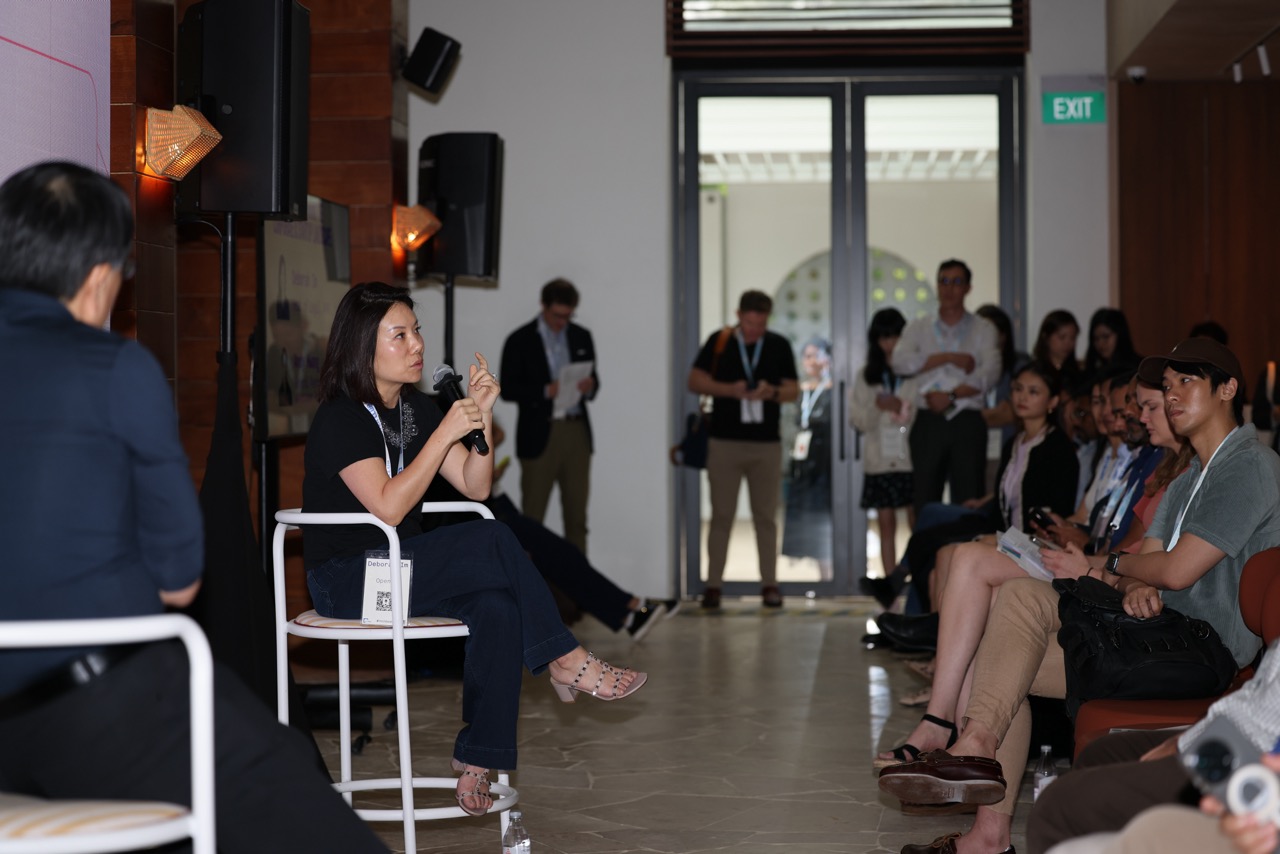
Deborah Im brought a rare combination of perspectives to the stage: operator, founder, big-tech exec (Meta, Stripe), and now Head of Legal for APAC at OpenAI, after initially advising the company on its Asia expansion. Her through line: AI is no longer a “whether” question for corporates, it’s a “how fast and how deeply” question. As she put it,
“The time has passed to debate whether to adopt AI... everyone should be adopting AI, and it has to come from the top.”
Deborah urged leaders to “AI-fy yourself” first and then normalize AI use across the organization, rather than letting employees quietly rely on shadow tools that expose corporate data. She also drew a sharp contrast between startups and large organizations: startups can grow up AI-native with no legacy jobs or workflows to protect, while corporates face internal resistance from exactly the functions (legal, IT, middle management) that feel most threatened. That’s why, in her view, AI strategy cannot be crowdsourced: “If you open it up to debate across teams, you’re going to get pushback. Leadership has to make the call."
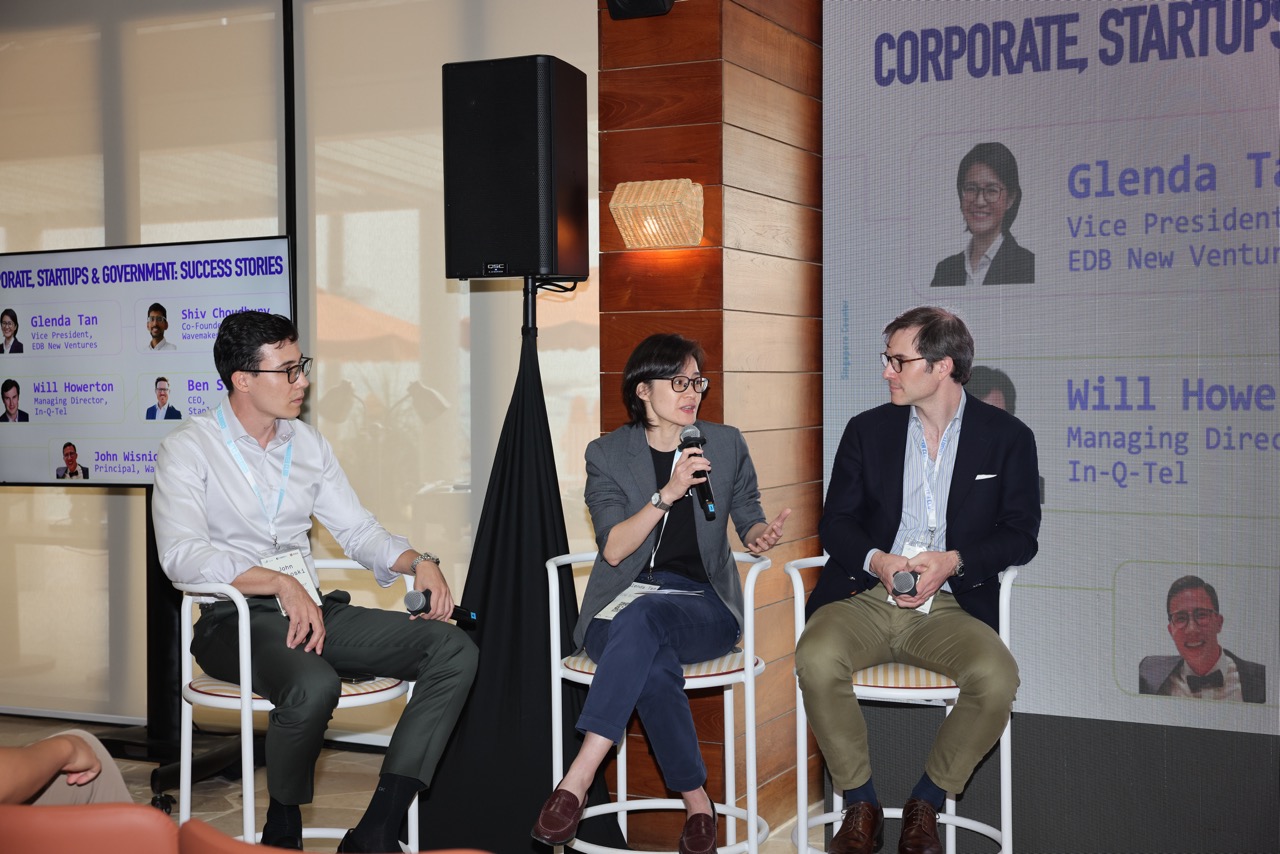
Glenda Tan distilled years of cross-sector partnership experience into one line:
“Success comes back to clarity — in people, in process, in pilots.”
Only ~1 in 5 corporates have a repeatable process for startup collaboration, a core blocker discussed across the panel.
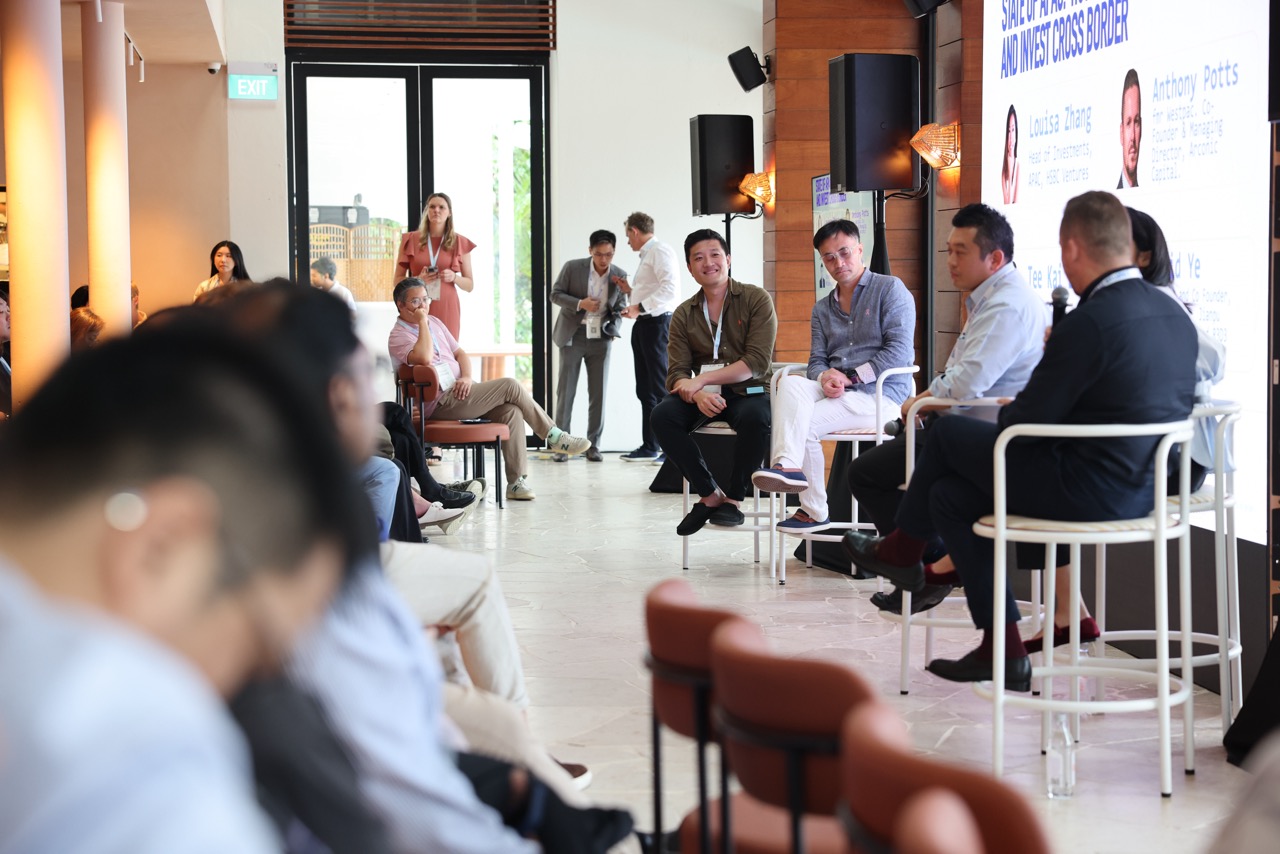
This panel explored where APAC corporates are finding opportunity amid geopolitical fragmentation. Two standout insights:
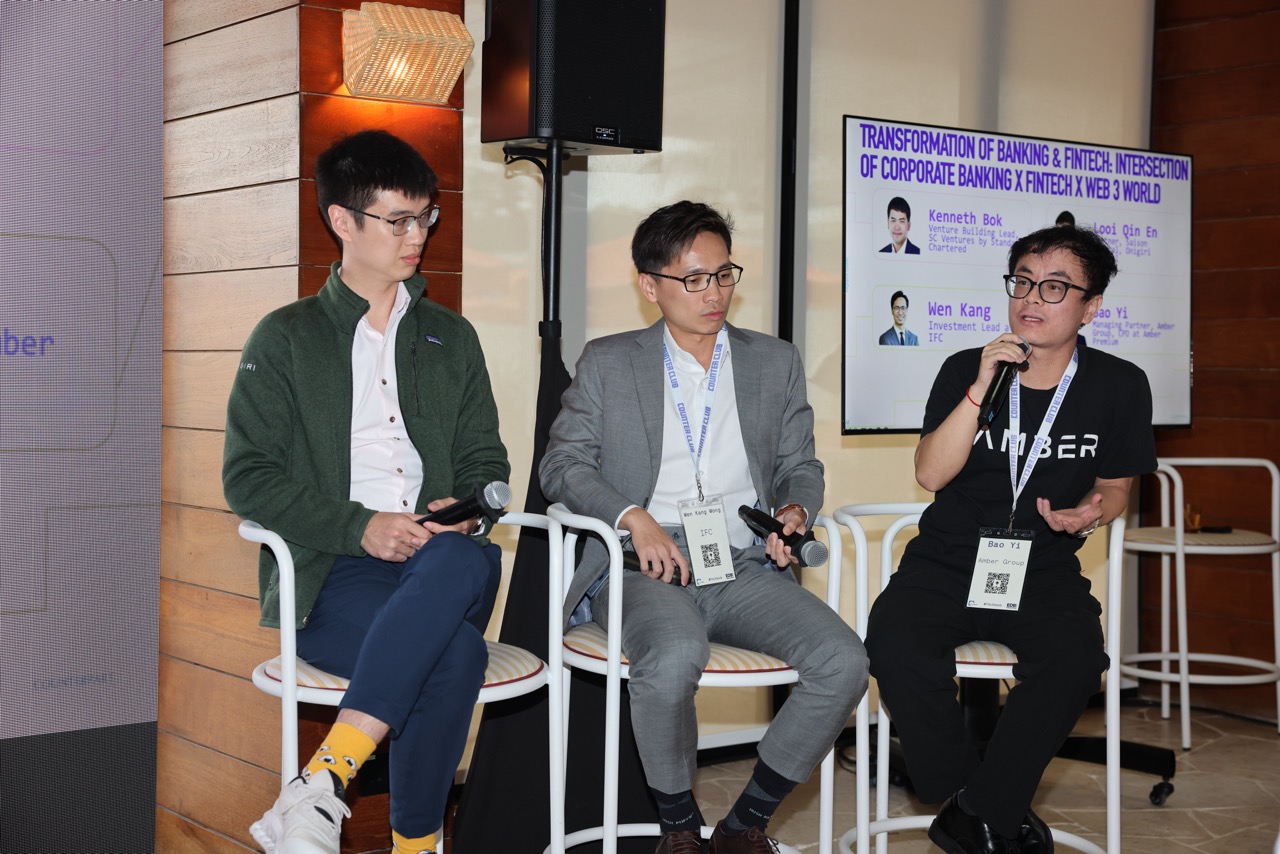
The final panel of the day explored how corporate banking, fintech, and Web3 are rapidly converging as institutions adapt. Panelists emphasized that customer expectations for instant, borderless finance, combined with clearer regulatory framework, are pushing banks and fintechs into deeper collaboration with Web3 infrastructure.
Bao Yi from Amber Group captured the convergence of fintech and digital assets:
“Users expect always-on service, programmable money, and borderless transactions… this real demand underpins the convergence.”
Demand — not hype — is forcing banks and fintechs into deeper collaboration with Web3 infrastructure.
It was a true pleasure sharing a taste of Counter with the Southeast Asian community. This summit marks just one stop in our Global Counter Series, with it all culimnating in CVC Week this fall 2026 in San Francisco.
Counter Club members (corporate VCs only) can access the full notes summary from this event ans network with our global community: https://counterclub.vc/
If you are a corporate investor and not a member yet, you can request to join here.
.svg)